- TOPLEY'S TOP 10
- Posts
- Topley's Top 10
Topley's Top 10
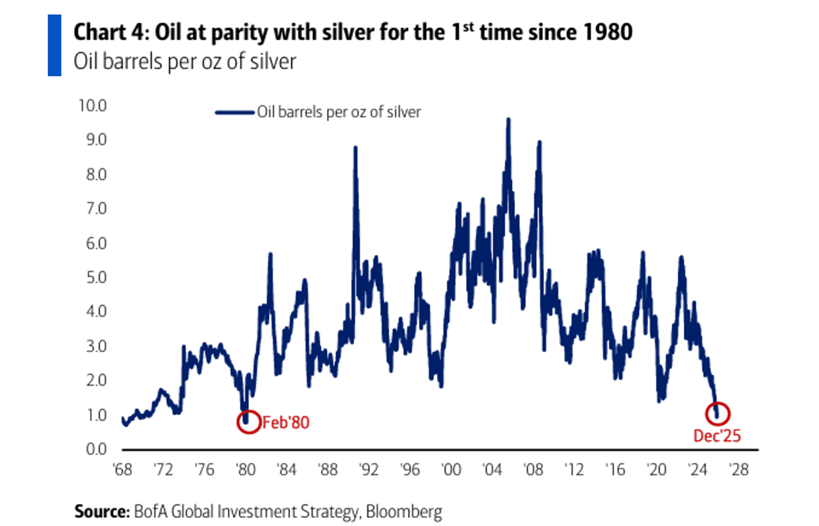
Oil at Parity with Silver for the First Time Since 1980
..
1. Oil at Parity with Silver for the First Time Since 1980
Marketwatch This chart from Bank of America notes that oil is at parity with silver (actually, a little below) for the first time in 1980.
Bank of America's Michael Hartnett, framed it as a reaction to global bond market turmoil -- the Austrian 100-year bond has collapsed -- while the Trump administration has made clear it doesn't want Treasury yields to get too high. "Productivity jump = boom & lower yields, otherwise square circled by much weaker US dollar…why silver hit parity vs oil for 1st time since 1980," he wrote.
Market Watch
..
2. Inflation Swaps Not Worried About Tariffs
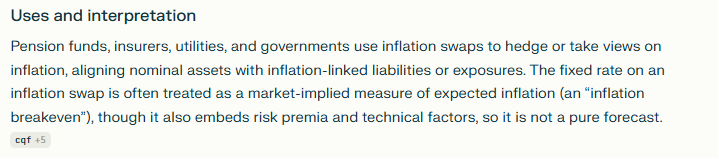
Inflation swaps. "Market signals suggest that concern about rising inflation, and in particular the impact of tariffs, has almost evaporated ... The market thinks the one-time price effect of the tariffs will be over a year from now. Market and Fed seem to agree that inflation has been tamed."

What are Inflation Swaps?
Perplexity.ai
..
3. Mexico Approves Tariffs on Asian Imports
TARIFF LADY– Mexican lawmakers gave final approval for new tariffs on Asian imports, broadly aligning with US efforts to tighten trade barriers against China, as President Claudia Sheinbaum seeks to protect local industry. Mexico’s Senate on Wednesday voted in favor of the bill that imposes tariffs of between 5% and 50% on more than 1,400 products from Asian nations that don’t have a trade deal with Mexico. The bill passed with 76 votes in favor, five against and 35 abstentions.

Dave Lutz Jones Trading
The new levies will take effect starting next year and hit a wide range of products from clothing to metals and auto parts, with the massive output of Chinese factories emerging as the legislation’s focus.
…
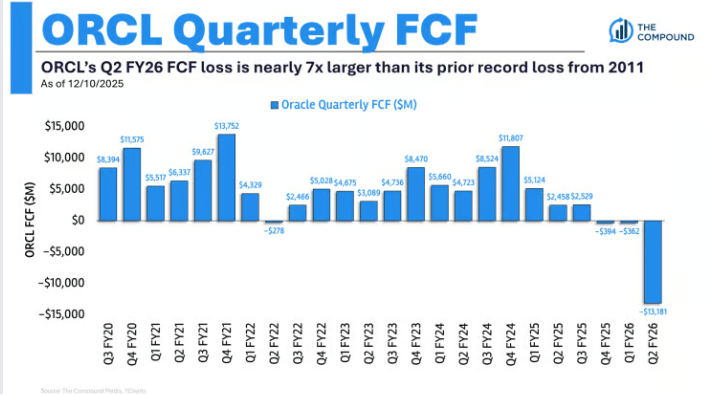
4. ORCL Free Cash Flow Chart
Irrelevant Investor
..
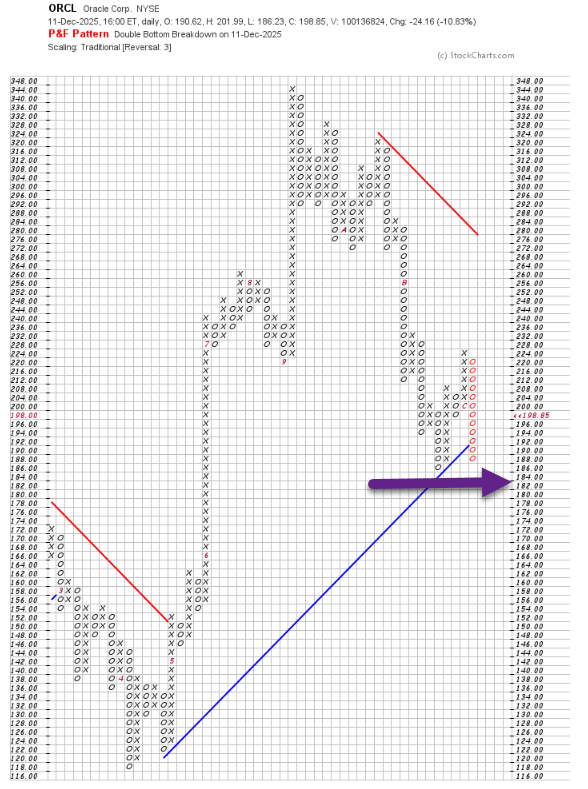
5. ORCL Traded Right Back Down to Recent Lows
Stock Charts
.
6. Cannabis stocks surge on reports Trump will reclassify marijuana; Tilray jumps 33%


CNBC
.
7. Disney Chose To Embrace AI …Stock Negative -35% 5-Year Chart

Google Finance
.
8. Savings Rate by Income

Market Watch
.
9. Do Your Own Research to Check these Stats
Gaming The System: Huge Proportion Of 'Elite' University Students Claiming Disabilities
by Tyler Durden Just when you thought the ongoing cultivation of weakness in American youth couldn't get much worse, huge proportions of the student bodies at US universities are enrolling with official disability designations that bestow various accommodations upon the students who claim them. As you may have expected, the alarming trend is most pronounced at what are supposed to be the most "elite" institutions.
We're not talking about people in wheelchairs, but rather students snagging diagnoses for ADHD, anxiety and depression from indulgent doctors. "It’s rich kids getting extra time on tests," an un-tenured professor at a selective university told The Atlantic's Rose Horowitch. Apparently fearing backlash, he requested anonymity.
The numbers are jarring. Harvard and Brown's undergraduate student body is 20% "disabled." Amherst has hit 34%, while Stanford's disability rate is a head-shaking 38%. At one unidentified law school, 45% of students have been awarded academic accommodations. In stark contrast, only 3 to 4% of students at public two-year colleges get disability accommodations.
"Obviously, something is off here," observes Emma Camp at Reason. "The idea that some of the most elite, selective universities in America—schools that require 99th percentile SATs and sterling essays—would be educating large numbers of genuinely learning disabled students is clearly bogus."
Disabled students are often given time-and-a-half or double-time to finish a test, and the freedom to turn in papers well beyond the given due date. However, extra time isn't the only benefit. At Carnegie-Mellon, a social-anxiety disorder can ensure a student isn't called upon by a professor without advance notice.
Schools also let supposedly learning-disabled students take tests in "reduced distraction testing environments," as being in a room with 80 other people is apparently just too taxing for them. However, a University of Chicago professor told the Atlantic that a deluge of students taking tests in the "reduced distraction testing environments" means those rooms are pretty much as "distracting" as a conventional classroom supposedly is.
In what may be the most darkly amusing accommodation, a public college in California allowed a student to bring her mother to class -- which backfired when the mother went beyond whatever role she was expected to play and eagerly participated in the discussions, tuition-free.
Professor Paul Graham Fisher, who'd previously co-chaired Stanford's disability task force, told the Atlantic:
“I have had conversations with people in the Stanford administration. They’ve talked about at what point can we say no? What if it hits 50 or 60 percent? At what point do you just say ‘We can’t do this’?”
Plenty of these students are likely motivated by a cut-throat desire to gain advantage. However, equally bad, it's possible a majority of these students sincerely consider themselves disabled. "Over the past few years, there's been a rising push to see mental health and neurodevelopmental conditions as not just a medical fact, but an identity marker," writes Reason's Camp, who notes that social media and other factors foster a rush to attribute common human fallibilities as some kind of medical condition. "The result is a deeply distorted view of 'normal,'" says Camp. "If ever struggling to focus or experiencing boredom is a sign you have ADHD, the implication is that a 'normal,' nondisabled person has essentially no problems."
The disability rush isn't limited to elite college campuses. High school students are using disability designations to score extra time on SAT and ACT tests. "We are also well aware of fliers in the district circulating among parents of doctors in the area who are known to hand out ADHD diagnoses," a high school teacher at an affluent public school told We Are Teachers. "In some cases, I think what’s happening is a pay-to-play situation.”
And the decline of the West proceeds apace...
.
10. The 9 Habits of Self-Improvement

Hagen Growth
Did someone forward this email to you? Get your own:
Disclosure
Indices that may be included herein are unmanaged indices and one cannot directly invest in an index. Index returns do not reflect the impact of any management fees, transaction costs or expenses. The index information included herein is for illustrative purposes only.
Material for market review represents an assessment of the market environment at a specific point in time and is not intended to be a forecast of future events, or a guarantee of future results.
Material compiled by Lansing Street Advisors is based on publicly available data at the time of compilation. Lansing Street Advisors makes no warranties or representation of any kind relating to the accuracy, completeness or timeliness of the data and shall not have liability for any damages of any kind relating to the use such data.
To the extent that content includes references to securities, those references do not constitute an offer or solicitation to buy, sell or hold such security as information is provided for educational purposes only. Articles should not be considered investment advice and the information contain within should not be relied upon in assessing whether or not to invest in any securities or asset classes mentioned. Articles have been prepared without regard to the individual financial circumstances and objectives of persons who receive it. Securities discussed may not be suitable for all investors. Please keep in mind that a company’s past financial performance, including the performance of its share price, does not guarantee future results.
Lansing Street Advisors is a registered investment adviser with the State of Pennsylvania.